
Make your own sticker remover using these recipes. Learn how to remove sticky residue the non-toxic, all-natural way and avoid harsh chemicals. These homemade adhesive removers WORK!
DIY Label Remover
I think we’ve all been in this position. You go to the craft store and pick out your surfaces (whether they be glass, ceramic, wood, etc) and place them in your basket.
You have all sorts of ideas for what you want to make, and can’t check out at the register and get home fast enough.
You’re ready to begin your first project so pick a glass jar out of the bag and remove the sticky residue and tag. Or at least try to.
You end up pick-pick-picking only to have the price tags partially rip off or leave sticky residue behind. That’s when it’s time for a DIY sticker remover.
How to Remove Sticker Residue
Before I get into the methods to get stickers off of glass, I wanted to go over a few questions I’ve gotten from readers. Remember that my focus is natural methods – let’s jump in!
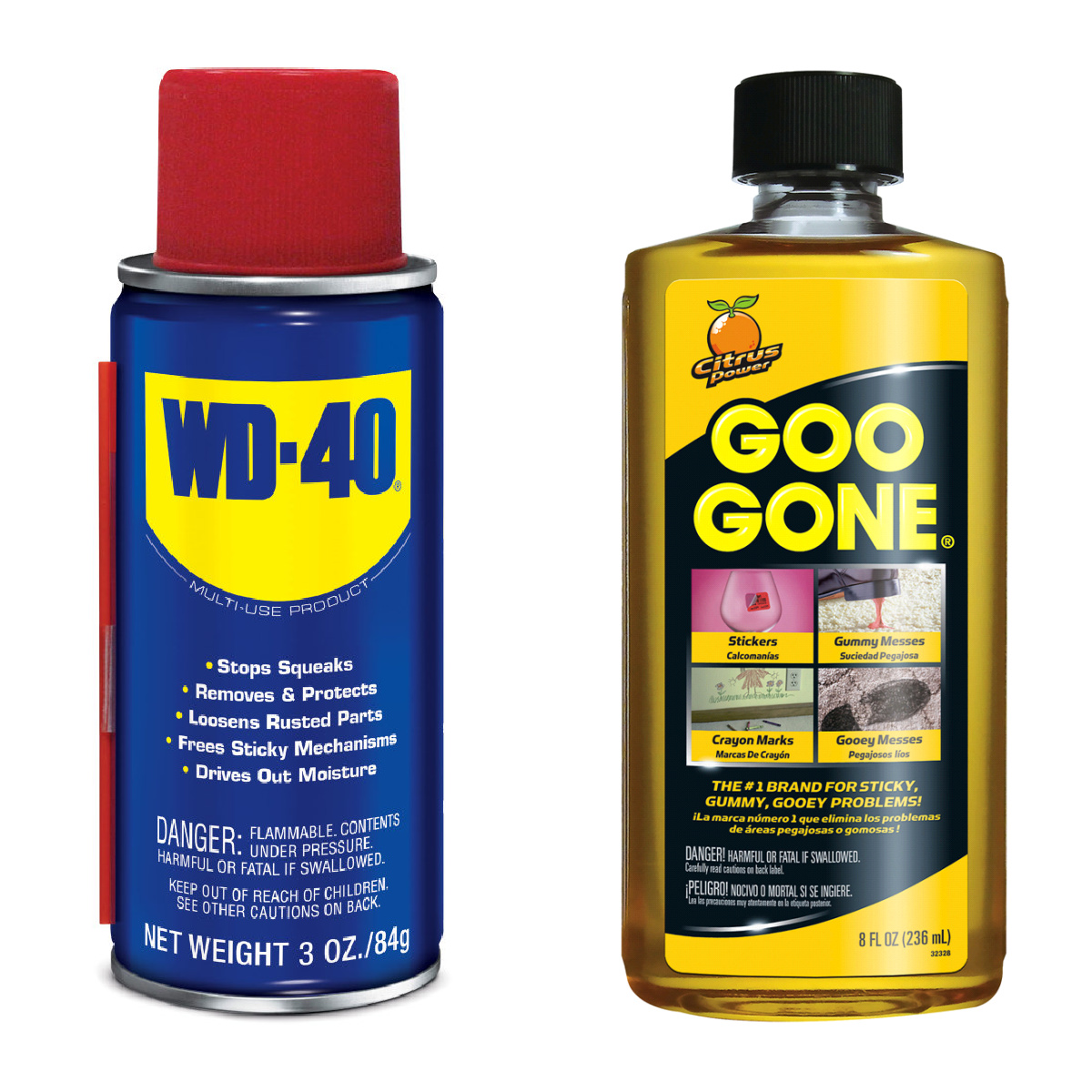
Why Not Use Goo Gone?
I’m going to be honest, I have always used Goo Gone in the past and it has never bothered my skin or respiratory system. However, the material safety data sheet (MSDS) for the product lists the hazard statements as: “Combustible liquid. May cause an allergic skin reaction. May be fatal if swallowed and enters airways.”
Without getting too scientific, some people might not feel comfortable using Goo Gone, especially if they are in sensitive groups or are pregnant. In that case, it’s probably a good idea to consider a DIY sticker remover.
What About WD-40?
When I asked my Facebook group about their preferred methods for homemade adhesive remover, one of the suggestions was WD-40 (basically you’d use it the same way as Goo Gone). I did a little research and found the MSDS for that product as well.
The hazard statements are: “Harmful or fatal if swallowed. Combustible liquid. If swallowed, may be aspirated and cause lung damage. May cause eye irritation. Avoid eye contact. Use with adequate ventilation. Keep away from heat, sparks, and all other sources of ignition.”
So from first glance of the hazards listed, WD-40 is even more problematic than Goo Gone. If you aren’t in a sensitive group, you may want to consider WD-40, but otherwise I’d avoid it and stick with the natural DIY sticker removal methods below.
How to Remove Stickers from Glass
After surveying my audience for their favorite DIY sticker remover methods, I’m presenting them below in order of preference. You absolutely need to do a test first in an inconspicuous area to make sure that the products below won’t stain the surface. This is especially true for wood (and I wouldn’t recommend any soaking).
Note that the oil methods should be used sparingly on wood and especially fabric as they might leave stains (which doesn’t matter if you are painting the wood). Removing stickers from glass and ceramic is the easiest and usually doesn’t cause a problem.
I feel confident about this list of options for DIY sticker remover because those surveyed have USED them and proven that they work! The common thread in a lot of these DIY sticker removers is that there is an oil in them.
Tells me that there is something in oil that reacts positively with the adhesive in terms of its removal. Learn how to remove sticker residue below; these are in order of preference. Start with a small amount of any of these and add more if you need!
Mayonnaise
Remove as much of the label as possible. Spread mayonnaise over the remaining adhesive and let sit for ten minutes. Then scrape with a credit card.
Peanut Butter
You’ll use this the same way as the mayonnaise. This one seems to be really good on plastic surfaces.
Soak in Hot Water
You’ll want to either boil water or run really hot water from your tap. Place the item into the hot water and soak for at least overnight. Follow up with a scrubber pad. Do not use this method on wood!
Household Oil
Leave a household oil (coconut oil, olive oil, baby oil). on the label for a few minutes. Scrap off the existing residue. This works really well to remove sticker residue off glass.
DIY Goo Gone
You can made homemade Goo Gone using three ingredients. Stir together 1/4 cup baking soda, 1/8 cup vegetable oil, and 3 drops of citrus essential oils. Apply this Goo Gone alternative and let sit, then wash off. You can store in an airtight container with lid.
Hand Lotion
This seems to work the same way that the oils do. You’ll want to remove as much of the label as possible before trying this method.
Hair Spray
Spray on, leave to sit for a few minutes, and wipe off.
Rubbing Alcohol
Wet a paper towel or rag with rubbing alcohol and rub where the adhesive is. If the sticker is stubborn, lay an alcohol soaked rag on the area and let sit for several minutes.
Eucalyptus Oil
This works like the other household oils from #4.
Hair Dryer or Heat Gun
I’ve tried this homemade adhesive remover with a heat gun and I have to say, it works very well. All you’ll do is point the hair dryer or heat gun at the area with adhesive and – like you’d imagine – get it really hot. Rub the sticker residue off with a rag or your finger (but remember the surface is hot!).
Baking Soda and Coconut Oil Paste
Mix 1 tsp of each together in a small container and apply to the sticker residue. Leave it on for several minutes and then use a hard edge to scrape off the remaining residue.
Note: several other label removal methods were suggested to me after this post was published. They are as follows:
- Exhaling on the label
- Placing in the freezer overnight
- Purell hand sanitizer
- Pure Citrus Air Freshener by Blue Magic or Real Citrus Air Freshener by OdoBan
- Bug spray
- Dish soap
- Butter
- Orange oil
- De-Solv-It – available overseas. This product is not expected to be a hazard to the environment, however it is extremely flammable
- Crafter’s Companion Stick Away – available in the UK. I can’t find an MSDS on this product.
- Un-Du Adhesive Remover (Goo Gone alternative)
- Pumice powder
- Skin So Soft – the Avon product
- Wallpaper remover – while it is not a hazard to the environment, it is flammable and could generate vapors
- Lighter fluid. Lighter fluid is toxic to aquatic life so I don’t personally feel comfortable washing it down the drain
Have you tried any label remover methods that you use regularly? What about homemade Goo Gone? I’d love to know how you remove sticker residue in the comments! I’d also love for you to check out these other crafting tips here on the blog:




Repair supermarket stick-on labels the cheap way:
1. soak in the sink, using hot water and a dash of washing up liquid detergent. Take out in 30 minutes. Scrape colored printed top layer with nails leaving the white paper base covering the gooey base.
2. Rub a wet piece of soap over it. Leave for 15 minute. Then use nails again to get off all of the white paper leaving the gooey base.
3. Wash under the tap and dry it.
4. Fold a paper towel in half 4 times. Put a decent glug of ordinary mineral turpentine on the paper towel. Apply it to the gooey base and keep rubbing until most of the gooey stuff is removed. Put another glug of turps on a clean part of the paper towel (unfold and fold a different way). Apply until all gooey is removed.
Voila!
P.S. Buy dishwashing detergent, soap and turps in the supermarket.
I use Pam spray oil and it works great.
Great tip! Thank you!
The coconut oil and baking soda doesn’t work. I tried it on 2 different items, one was a glass salad dressing bottle and the other was a glass cranberry juice bottle. The sticky on the cranberry juice bottle actually got worse. Yuk. What a waste!
Hi Ruth! I haven’t tried all of the submissions; they are from readers. So they probably don’t all work on every surface! If it’s not working, I’d go for some of the other suggestions.
I have found that placing items in the freezer overnight works. Most adhesives can’t work in cold temperatures (except for freezer tape…it was specially designed to remain sticky in extreme cold). After letting the item and label/sticker get cold, it’s very easy to peel off and rarely leaves any adhesive residue in the item.
This is all really helpful information. Thanks, Amy. There is another method I can suggest, though it does not work on every label. If you fill a glass container with boiling water and leave it standing for a few minutes (don’t let the water cool down too much), the glue sometimes softens and the label just peels right off, leaving no residue! Like the heat gun idea you mentioned, the glass does get hot, but you have to make sure there is enough heat to keep the glue soft. Wearing rubber gloves might help. I haven’t tried this with containers made of other materials, such as plastic. This works better than soaking in hot water, which is what I still sometimes have to do. Now I try the hot water inside first and then use other methods if that doesn’t work.
Mayonnaise, peanut butter- I know the desperation sticky residue causes, but I wouldn’t have thought of those:) I have just learnt about the hair dryer, it works with double sided tape too. I just want to know why these labels and glues get put on in the first place when the customer has to go to such trouble to get them off!
Hi there, after using one of the methods you described above, usually hot water, I try to prevent self sticking labels for homemade jams etc.
I use normal paper, cut it into a label, name the jam and brush beaten eggwhite on the back.
This works very well and there is no hustle to reuse the jar . Just wash the label off!for next use!
I like to leave glass jars soaking in the last of a bowl of warm washing up water to get rid of their labels.
I had never considered mayonnaise!
Peel off the sticker with fingers. Scrape residue with credit card, coin, butter knife to remove paper on top of glue residue but don’t spend much time on it. Pull off a piece of tape from a sticky roll like duct tape or packing tape but not low tack tape like painters tape. Press the tape over the residue so it is stuck to the residue then rip off the tape. The residue that stuck to the tape will come up with it. Use the duct tape to cover small areas of residue and rip, rip, rip. As residue covers the duct tape, keep using new areas of the duct tape. Just press and rip up, press and rip up. Works for every surface…this method has never failed me and unlike oil methods, leaves no stain or residue of its own.
I’ve been using De-Solv-It Safe!..No Harsh chemicals.. It has worked for me for years and is Orange based …no harmful effects.!