
Make your own sticker remover using these recipes. Learn how to remove sticky residue the non-toxic, all-natural way and avoid harsh chemicals. These homemade adhesive removers WORK!
DIY Label Remover
I think we’ve all been in this position. You go to the craft store and pick out your surfaces (whether they be glass, ceramic, wood, etc) and place them in your basket.
You have all sorts of ideas for what you want to make, and can’t check out at the register and get home fast enough.
You’re ready to begin your first project so pick a glass jar out of the bag and remove the sticky residue and tag. Or at least try to.
You end up pick-pick-picking only to have the price tags partially rip off or leave sticky residue behind. That’s when it’s time for a DIY sticker remover.
How to Remove Sticker Residue
Before I get into the methods to get stickers off of glass, I wanted to go over a few questions I’ve gotten from readers. Remember that my focus is natural methods – let’s jump in!
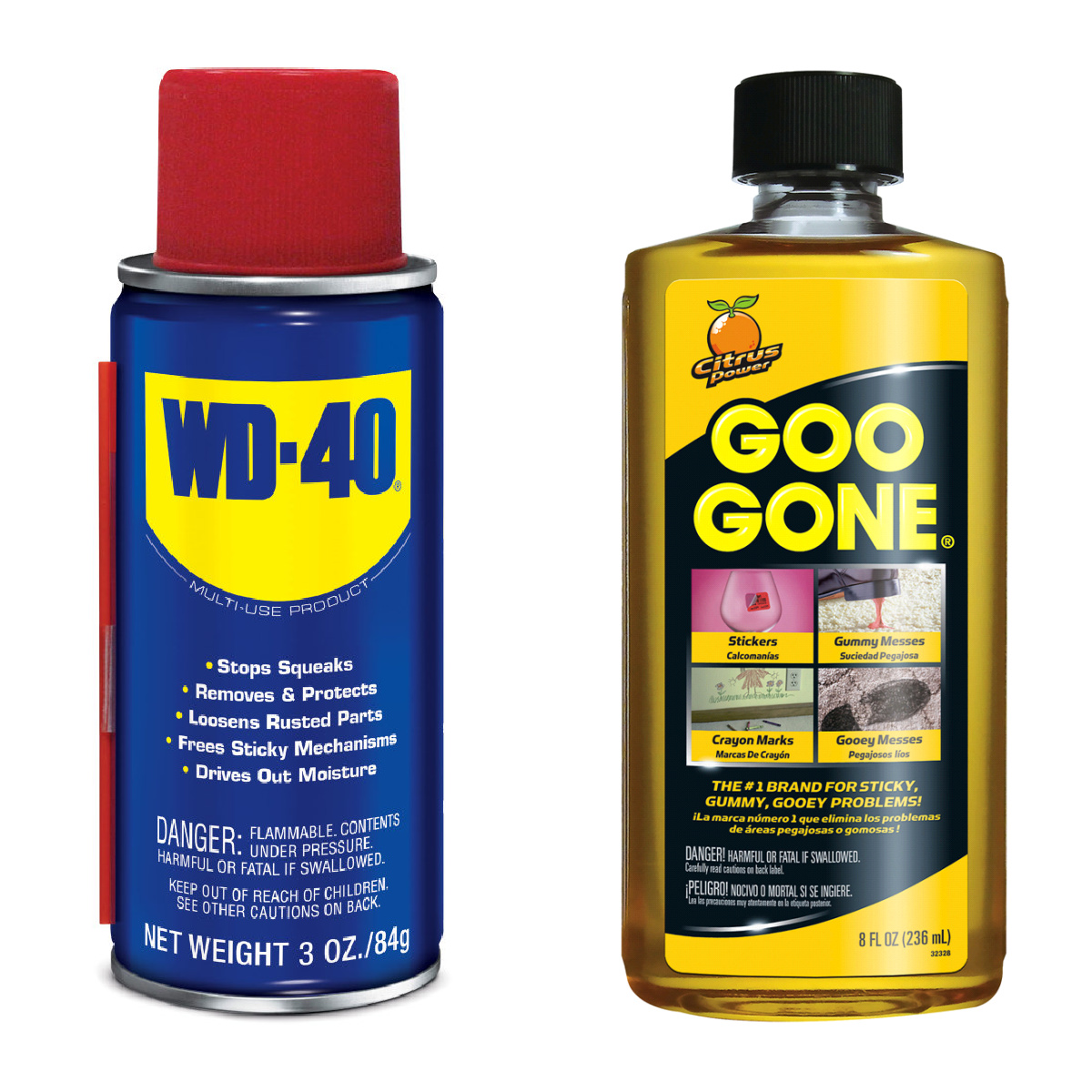
Why Not Use Goo Gone?
I’m going to be honest, I have always used Goo Gone in the past and it has never bothered my skin or respiratory system. However, the material safety data sheet (MSDS) for the product lists the hazard statements as: “Combustible liquid. May cause an allergic skin reaction. May be fatal if swallowed and enters airways.”
Without getting too scientific, some people might not feel comfortable using Goo Gone, especially if they are in sensitive groups or are pregnant. In that case, it’s probably a good idea to consider a DIY sticker remover.
What About WD-40?
When I asked my Facebook group about their preferred methods for homemade adhesive remover, one of the suggestions was WD-40 (basically you’d use it the same way as Goo Gone). I did a little research and found the MSDS for that product as well.
The hazard statements are: “Harmful or fatal if swallowed. Combustible liquid. If swallowed, may be aspirated and cause lung damage. May cause eye irritation. Avoid eye contact. Use with adequate ventilation. Keep away from heat, sparks, and all other sources of ignition.”
So from first glance of the hazards listed, WD-40 is even more problematic than Goo Gone. If you aren’t in a sensitive group, you may want to consider WD-40, but otherwise I’d avoid it and stick with the natural DIY sticker removal methods below.
How to Remove Stickers from Glass
After surveying my audience for their favorite DIY sticker remover methods, I’m presenting them below in order of preference. You absolutely need to do a test first in an inconspicuous area to make sure that the products below won’t stain the surface. This is especially true for wood (and I wouldn’t recommend any soaking).
Note that the oil methods should be used sparingly on wood and especially fabric as they might leave stains (which doesn’t matter if you are painting the wood). Removing stickers from glass and ceramic is the easiest and usually doesn’t cause a problem.
I feel confident about this list of options for DIY sticker remover because those surveyed have USED them and proven that they work! The common thread in a lot of these DIY sticker removers is that there is an oil in them.
Tells me that there is something in oil that reacts positively with the adhesive in terms of its removal. Learn how to remove sticker residue below; these are in order of preference. Start with a small amount of any of these and add more if you need!
Mayonnaise
Remove as much of the label as possible. Spread mayonnaise over the remaining adhesive and let sit for ten minutes. Then scrape with a credit card.
Peanut Butter
You’ll use this the same way as the mayonnaise. This one seems to be really good on plastic surfaces.
Soak in Hot Water
You’ll want to either boil water or run really hot water from your tap. Place the item into the hot water and soak for at least overnight. Follow up with a scrubber pad. Do not use this method on wood!
Household Oil
Leave a household oil (coconut oil, olive oil, baby oil). on the label for a few minutes. Scrap off the existing residue. This works really well to remove sticker residue off glass.
DIY Goo Gone
You can made homemade Goo Gone using three ingredients. Stir together 1/4 cup baking soda, 1/8 cup vegetable oil, and 3 drops of citrus essential oils. Apply this Goo Gone alternative and let sit, then wash off. You can store in an airtight container with lid.
Hand Lotion
This seems to work the same way that the oils do. You’ll want to remove as much of the label as possible before trying this method.
Hair Spray
Spray on, leave to sit for a few minutes, and wipe off.
Rubbing Alcohol
Wet a paper towel or rag with rubbing alcohol and rub where the adhesive is. If the sticker is stubborn, lay an alcohol soaked rag on the area and let sit for several minutes.
Eucalyptus Oil
This works like the other household oils from #4.
Hair Dryer or Heat Gun
I’ve tried this homemade adhesive remover with a heat gun and I have to say, it works very well. All you’ll do is point the hair dryer or heat gun at the area with adhesive and – like you’d imagine – get it really hot. Rub the sticker residue off with a rag or your finger (but remember the surface is hot!).
Baking Soda and Coconut Oil Paste
Mix 1 tsp of each together in a small container and apply to the sticker residue. Leave it on for several minutes and then use a hard edge to scrape off the remaining residue.
Note: several other label removal methods were suggested to me after this post was published. They are as follows:
- Exhaling on the label
- Placing in the freezer overnight
- Purell hand sanitizer
- Pure Citrus Air Freshener by Blue Magic or Real Citrus Air Freshener by OdoBan
- Bug spray
- Dish soap
- Butter
- Orange oil
- De-Solv-It – available overseas. This product is not expected to be a hazard to the environment, however it is extremely flammable
- Crafter’s Companion Stick Away – available in the UK. I can’t find an MSDS on this product.
- Un-Du Adhesive Remover (Goo Gone alternative)
- Pumice powder
- Skin So Soft – the Avon product
- Wallpaper remover – while it is not a hazard to the environment, it is flammable and could generate vapors
- Lighter fluid. Lighter fluid is toxic to aquatic life so I don’t personally feel comfortable washing it down the drain
Have you tried any label remover methods that you use regularly? What about homemade Goo Gone? I’d love to know how you remove sticker residue in the comments! I’d also love for you to check out these other crafting tips here on the blog:



Dear Amy,
Thank you so much for all that you do to make Mod Podge crafting so much
fun and so interesting too.
From my friend June came this time saver for me in removing the sticky adhesive
left behind.
Pure Citrus Air Freshener by Blue Magic, also Real Citrus Air Freshener by OdoBan.
Care should be taken with these sprays on some plastic items causing the area to become ruff, but on glass it works great.
Thank you for these 10 non-toxic methods that I can try and find around my house.
Donna
You know when you go to church and you are just sure the preacher’s sermon is just for you, so timely, well, that’s how I feel about this post. I am working with a lot of projects right now that all seem to have tape or stickers. As with a lot of you, I hate to use GooGone. I’m anxious,to try these methods. Thank you, thank you!
Using either GooGone or WD40 is all you need. Wet an old rag, or sponge in hot water and then add your preferred product place the rag on the label and let soak a few minutes, you may not even need to scrape off. I’ve been doing this for almost 20 years so I can reuse the glass jars candles come in. It always works beautifully.
sherry
Hi Sherry! Yes these work well but are not an option for all people – some are in sensitive groups, or just don’t want to use something that’s got any hazards.
Hi, great article thank you and I will definitely try the food choices. I always use lighter fluid and you’ll find there isn’t anything to wash away if you clean the glue off with a paper towel because the lighter fuel actually evaporastes. It works really well 99.99 percent of the time. I’ve tried rubbing alcohol and it’s not nearly as good and if the item is plastic it may even damage it! The very hot water option also damages plastics and depending on the glue in some cases it becomes even stickier. So, except for the mayo, peanut butter, oils & hairspray I think I’ve tried all the others and lighter fluid is the way to go hands down. I am really hoping the hairspray or even better the food choices work as I would be willing to forfeit the lighter fluid if they do! Have a great day 😉
I use hand sanitizer. It’s great! I also use it for removing stuck on grease like on a stove top, removing soap scum and just about any “gunk”. But, don’t use the type that have those tiny beads in them. They can scratch some surfaces.
Hi Kat, ooh I will definitely give that a try, thank you!!!
Thanks for all these suggestions. I usually use Goo Gone, but I’m going to give baby oil and heat a try. Much appreciated!
I often have luck just laying the item in the sink and cover the label with dish soap. Let it sit a bit and usually comes off easily. I wish there was a way to remove a sticker on something you don’t want to get wet? Have tried a hair dryer but not too good of results.
I have had great success with the product Scrapper’s Solution Undu. You can use it to remove stickers in scrapbooking and are able to reuse the sticker. I also love having a razor blade to remove residue from jars. I also found a pumice powder to remove a filmy residue on a bathroom mirror. I had tried everything: alcohol, window cleaner, and even the steam mop. The pumice powder did an excellent job!
I would like to get their adhesive so I could make my own labels invinceable! I would like a dishwater safe costing for my crafts. Or maybe I should try painting on glass. However I think it can be done with labels as I have a horrible time getting labbels off syrup and pickles …anything with a free pretty jar…for my crafts… I scrape and peel and soak and try everything and still have left on glue….Also theirs is so even and clear……Spagetti jars have real tough glued on labels. And such a nice size I hate to spend my craft time on cleaning and scarping jar glue.
Purell hand sanitizer works better than rubbing alcohol. Spread over adhesive and leave for a few minutes. Then scrape with a credit card or other sharp edged item.
Peggy – thank you for the input! I’m making notes to update the article after about a week or so based on the comments 😀
After seeing the recommendation to use a hair dryer knowing that it was heat that softened the adhesive, I tried my own method of creating heat – I loosened a corner of the label, then I exhaled right down on the exposed adhesive, and continued to slowly peel back the label and exhaled every time I revealed another part of the label, directing my breath right at the contact point. It was an amazing find. Nothing toxic, always at hand,
Patricia I love that!! Nothing better than using something you already have in your back pocket ;D